

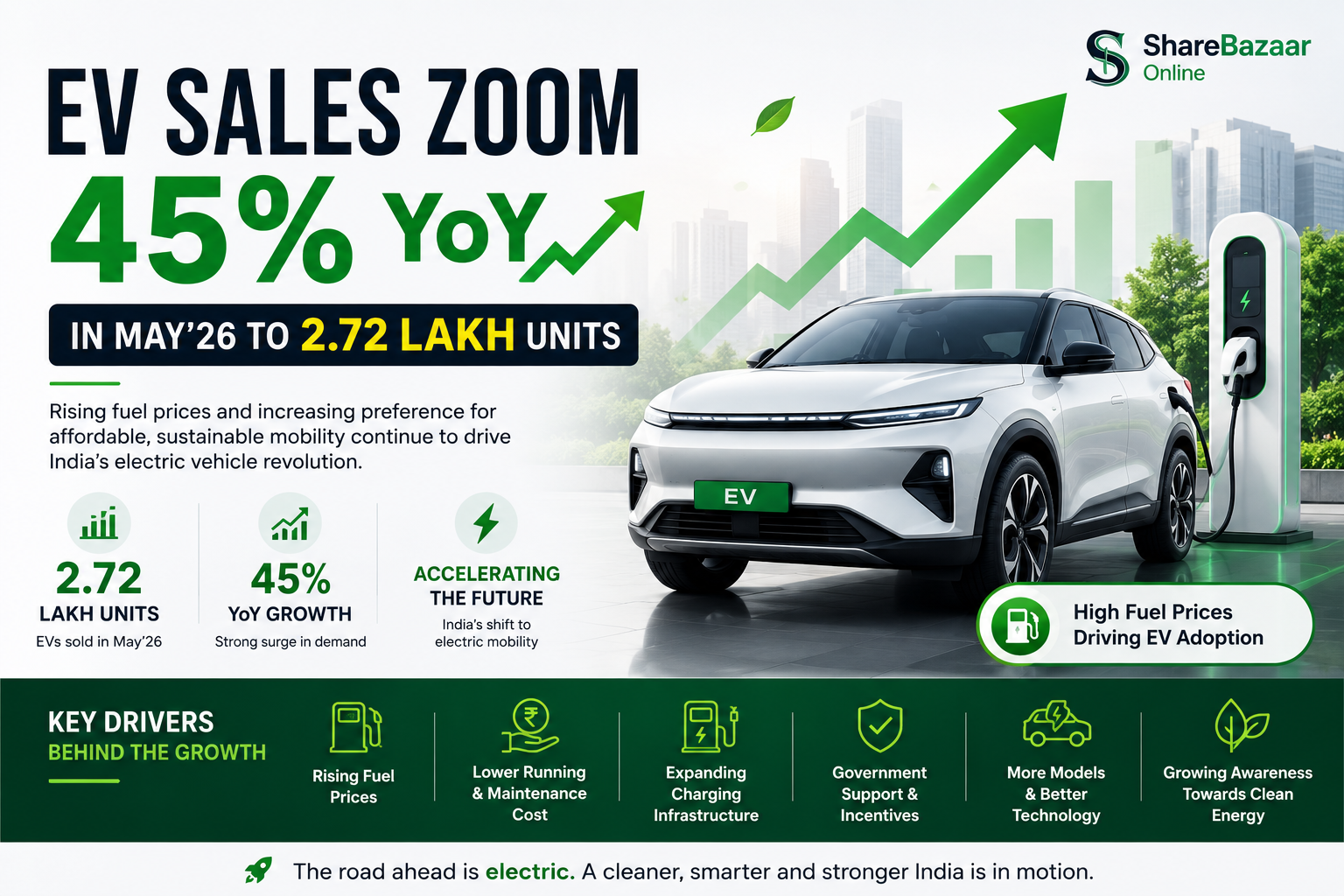
India's electric vehicle (EV) market witnessed remarkable growth in May 2026, highlighting the country's accelerating transition toward sustainable transportation. Rising fuel prices, increasing consumer awareness, improved vehicle choices, and expanding charging infrastructure have collectively fueled a significant jump in EV adoption across multiple vehicle segments.
According to industry data, electric vehicle retail sales crossed 2.7 lakh units during May 2026, representing a strong year-on-year growth of approximately 45%. This growth significantly outpaced the overall automobile industry, demonstrating the increasing preference for electric mobility among Indian consumers.
The sharp rise in EV demand comes at a time when fuel prices remain elevated, prompting consumers and businesses to explore cost-efficient transportation solutions. Electric vehicles offer lower running costs, reduced maintenance expenses, and improved long-term savings, making them an attractive alternative to conventional petrol and diesel vehicles.
Why EV Demand Is Growing Rapidly in India
Several factors have contributed to the strong growth in electric vehicle adoption:
- Rising petrol and diesel prices across the country.
- Lower operating and maintenance costs compared to conventional vehicles.
- Improved charging infrastructure in urban and semi-urban areas.
- Availability of financing schemes and attractive discounts.
- Growing environmental awareness among consumers.
- Government initiatives promoting clean mobility.
- Increased model availability across different price ranges.
As a result, EV penetration in India's automobile market has reached new highs, with electric vehicles accounting for a larger share of total vehicle registrations than ever before.
Electric Two-Wheelers Continue to Lead the Market
Electric two-wheelers remain the primary growth driver within the EV ecosystem. Scooters and electric motorcycles have become increasingly popular among daily commuters looking to reduce fuel expenses and benefit from lower ownership costs.
Key highlights include:
- Electric two-wheelers account for the largest share of EV sales.
- Urban commuters are driving most of the demand.
- Manufacturers continue launching new affordable models.
- Battery technology improvements are enhancing vehicle range.
- Faster charging solutions are increasing consumer confidence.
The segment has emerged as the most accessible entry point for first-time EV buyers in India.
Passenger Vehicle Segment Shows Strong Growth
While two-wheelers dominate volumes, the passenger vehicle segment is also experiencing substantial growth. Consumers are increasingly considering electric cars as manufacturers introduce new models with improved features, enhanced range, and competitive pricing.
Factors supporting passenger EV growth include:
- Rising fuel costs.
- Better battery performance.
- Expanding charging networks.
- Growing model options from major automakers.
- Attractive ownership economics over the long term.
Industry experts believe passenger EV adoption could accelerate further as charging infrastructure becomes more widespread.
Impact of High Oil Prices on Consumer Behaviour
One of the most significant drivers behind the recent EV boom is the sustained increase in crude oil prices. Higher fuel costs directly impact household transportation budgets and business operating expenses.
Consumers are increasingly evaluating:
- Monthly fuel savings.
- Lower maintenance requirements.
- Long-term ownership benefits.
- Reduced dependence on fossil fuels.
- Environmental advantages.
This shift in consumer mindset is creating favorable conditions for the electric mobility sector to expand rapidly over the coming years.
EV Market Trends Investors Should Watch
Investors and industry participants should monitor several emerging trends:
Key Growth Indicators
- Rising EV penetration across vehicle categories.
- Expansion of public charging infrastructure.
- Battery manufacturing investments.
- Government policy support.
- Growth in EV financing options.
- Increasing participation by established automobile brands.
- Development of domestic battery supply chains.
These factors are expected to shape the next phase of India's electric mobility journey.
Future Outlook for India's EV Industry
Industry experts remain optimistic about the future of electric mobility in India. Continued investment in infrastructure, battery technology, manufacturing capacity, and consumer awareness is expected to drive long-term growth.
The combination of supportive policies, increasing fuel prices, technological advancements, and changing consumer preferences positions India as one of the fastest-growing EV markets globally.
As the country moves toward cleaner and more sustainable transportation solutions, electric vehicles are expected to play a critical role in reducing fuel imports, lowering emissions, and transforming the future of mobility.
Conclusion
The strong growth in EV sales during May 2026 reflects a broader structural shift in India's transportation landscape. With rising fuel costs and improving EV economics, consumers are increasingly embracing electric mobility as a practical and cost-effective alternative.
As adoption continues to accelerate, the EV sector presents significant opportunities for manufacturers, investors, infrastructure providers, and consumers alike.
Looking to Stay Updated on Emerging Investment Opportunities?
Explore the latest market insights, IPO updates, broker analysis, and investment opportunities at ShareBazaarOnline and stay ahead of evolving market trends.