

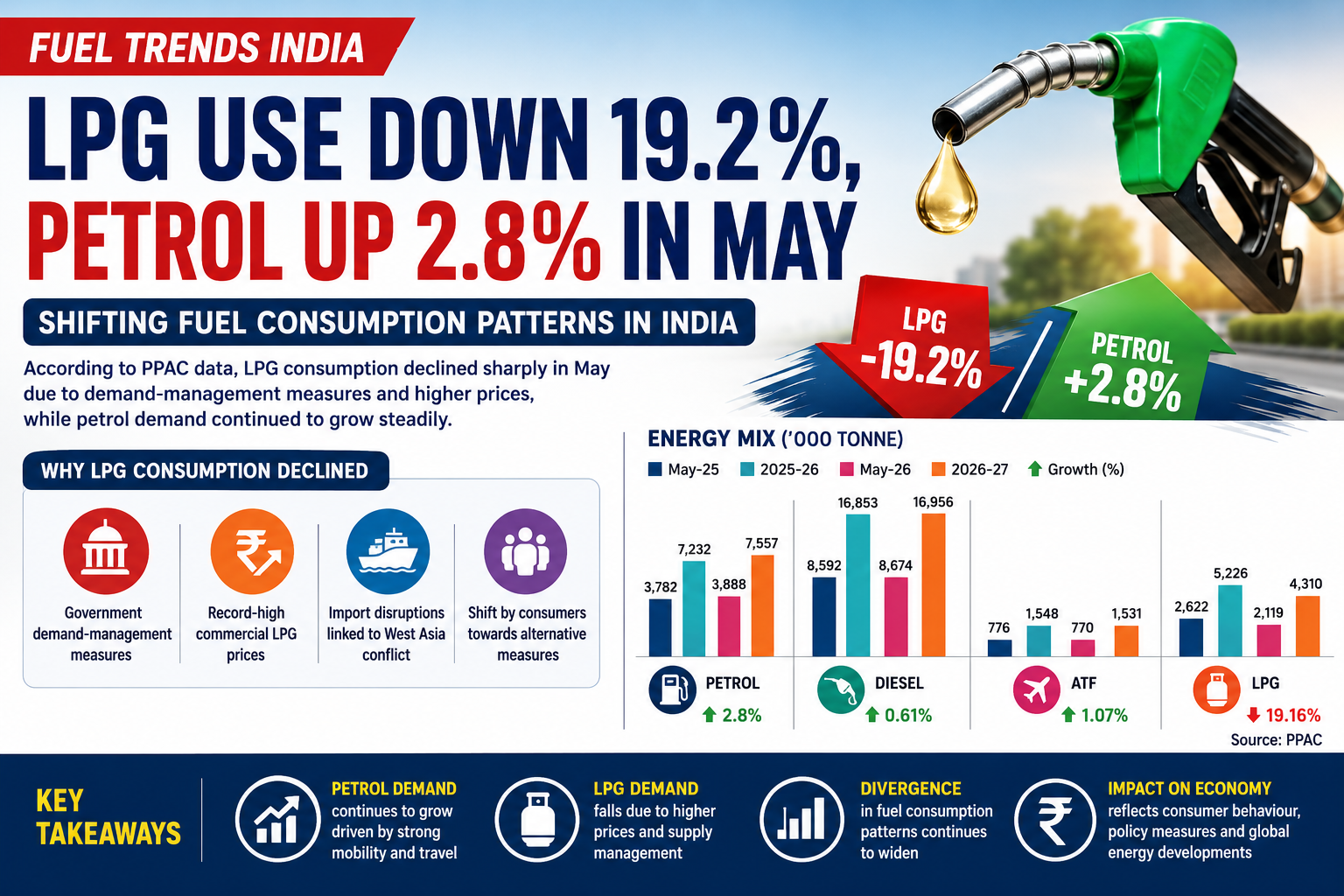
LPG Consumption Declines Sharply as Petrol Demand Continues to Rise
India's energy consumption pattern witnessed a notable shift in May, with Liquefied Petroleum Gas (LPG) consumption registering a significant decline while petrol demand continued its upward trajectory. According to data released by the Petroleum Planning and Analysis Cell (PPAC), LPG consumption fell by 19.2% year-on-year, making it the weakest-performing major petroleum product during the month.
The decline highlights changing market dynamics, government demand-management measures, and rising commercial LPG prices, which have influenced consumption behavior across various sectors.
At the same time, petrol demand continued to show resilience, recording growth of 2.8% compared to the previous year. The increase reflects sustained mobility, higher vehicle usage, and continued economic activity across urban and rural markets.
Key Highlights
- LPG consumption declined by 19.2% year-on-year in May.
- Petrol demand increased by 2.8% compared to the same period last year.
- Diesel consumption recorded modest growth.
- Aviation Turbine Fuel (ATF) demand remained relatively stable.
- Government demand-management measures impacted LPG bookings.
- Higher commercial LPG prices influenced consumer behavior.
- India's fuel consumption mix is witnessing significant changes.
Why LPG Consumption Declined
The sharp fall in LPG demand can be attributed to multiple factors affecting both supply and consumption.
Government authorities implemented demand-management measures to regulate LPG availability amid supply concerns. Restrictions on booking cycles and distribution controls impacted overall consumption levels.
Additionally, rising commercial LPG prices encouraged some businesses and consumers to explore alternative fuel options. Market experts believe higher operating costs have led restaurants, commercial establishments, and industrial users to optimize fuel consumption.
Another factor contributing to the decline was global supply uncertainty arising from geopolitical developments and disruptions in international energy markets.
Petrol Demand Remains Strong
Despite fluctuations in global crude oil prices, petrol consumption continued to grow steadily.
Several factors supported demand growth:
- Increased passenger vehicle usage
- Higher intercity travel
- Strong economic activity
- Expanding vehicle ownership
- Growth in ride-sharing and logistics sectors
The steady increase in petrol demand indicates that consumer mobility remains strong despite economic uncertainties.
India's Fuel Consumption Pattern Is Changing
The latest PPAC data suggests a widening divergence between different fuel categories.
While traditional transportation fuels such as petrol continue to benefit from economic growth and mobility trends, LPG demand faces challenges from pricing pressures and policy interventions.
This evolving fuel mix reflects broader changes in India's energy landscape, where consumers and businesses are becoming more sensitive to fuel costs and availability.
Fuel Consumption Snapshot
Petrol
- Demand Growth: +2.8%
- Driven by vehicle usage and transportation activity
- Continued recovery in consumer mobility
Diesel
- Stable growth trend
- Supported by industrial and freight movement
- Remains India's most consumed transportation fuel
Aviation Turbine Fuel (ATF)
- Relatively stable demand
- Supported by growing air passenger traffic
LPG
- Demand Decline: -19.2%
- Impacted by higher prices and supply management measures
- Largest decline among major petroleum products
Impact on Oil & Gas Sector
The changing consumption pattern could have implications for:
Oil Marketing Companies (OMCs)
- Inventory planning
- Product mix optimization
- Margin management
LPG Distributors
- Lower demand growth
- Pressure on commercial sales volumes
Refiners
- Shifting production priorities
- Increased focus on transportation fuels
Investors
- Energy sector trends may influence listed oil and gas companies
- Consumption data provides insights into economic activity
What This Means for India's Economy
Fuel consumption is often considered a key indicator of economic activity.
Rising petrol demand signals:
- Strong consumer spending
- Increased travel activity
- Expanding transportation requirements
Meanwhile, declining LPG consumption may indicate:
- Cost-conscious consumer behavior
- Demand-management effects
- Shift toward alternative energy sources
The trend highlights how policy decisions, pricing dynamics, and global energy developments can significantly influence domestic fuel consumption.
Conclusion
India's latest fuel consumption data reveals an important shift in energy demand patterns. While petrol consumption continues to benefit from economic growth and increased mobility, LPG demand has experienced a significant slowdown due to pricing pressures and regulatory measures.
Going forward, energy market participants, policymakers, and investors will closely monitor these trends to assess their impact on India's broader economic and energy landscape.
Quick Summary
- LPG consumption fell 19.2% in May.
- Petrol demand increased 2.8% year-on-year.
- Rising LPG prices affected demand.
- Government demand-management measures impacted LPG bookings.
- Petrol continues to benefit from strong transportation activity.
- India's fuel consumption mix is undergoing structural changes.